Lighting strategy for young plants

-60%
HPS consumption
MyRED
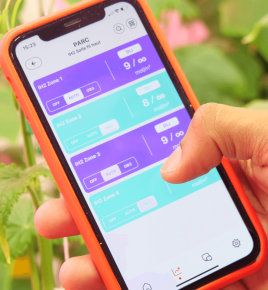
Creation and management of growing zones
RED lighting provides us with energy savings, agronomic quality, more precise production times, and a cultivation schedule better suited to our production.
CONTROL AND OPTIMIZATION OF GROWTH STAGES:
Nicolas Paul
Director of Groupe Thomas Plants, France
01
Reduce energy consumption
02
Obtain high-quality young plants
03
Flexible equipment meeting the needs of all species
The cultivation of young plants is characterized by the multitude of species and varieties produced simultaneously. Each of them has specific lighting needs, both in terms of quality and quantity. Having dynamic top lighting is a must. The same flexible and cost-effective equipment can be used for all your varieties while reducing your energy consumption. Indeed, flexibility should not come at the expense of energy efficiency.
Each of the many stages of development has its own specificities:
↗ Germination percentage
↗ Mobilization of seed reserves for better emergence
↗ Homogeneity of germination
↗ Elongation for grafting
↗ Stem diameter management
↗ Homogeneity of plants
↗ Vigorous plants
↗ Survival rate
↗ Vigor
↗ Architecture management
↗ Management of the vegetative/generative balance in plants with reserves
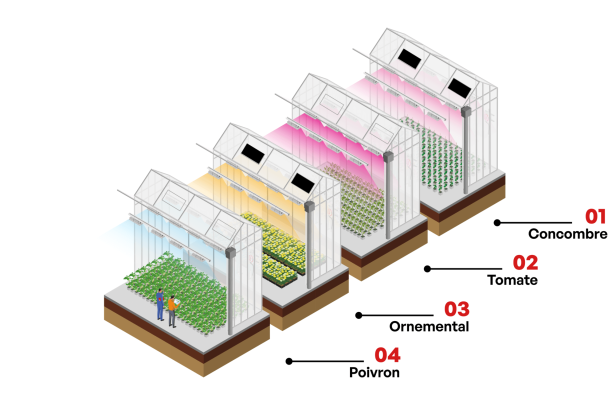
Flexibility designed to meet your unique production needs.
With a unique system, each cultivation zone has an optimized lighting strategy for your cultivation goals.
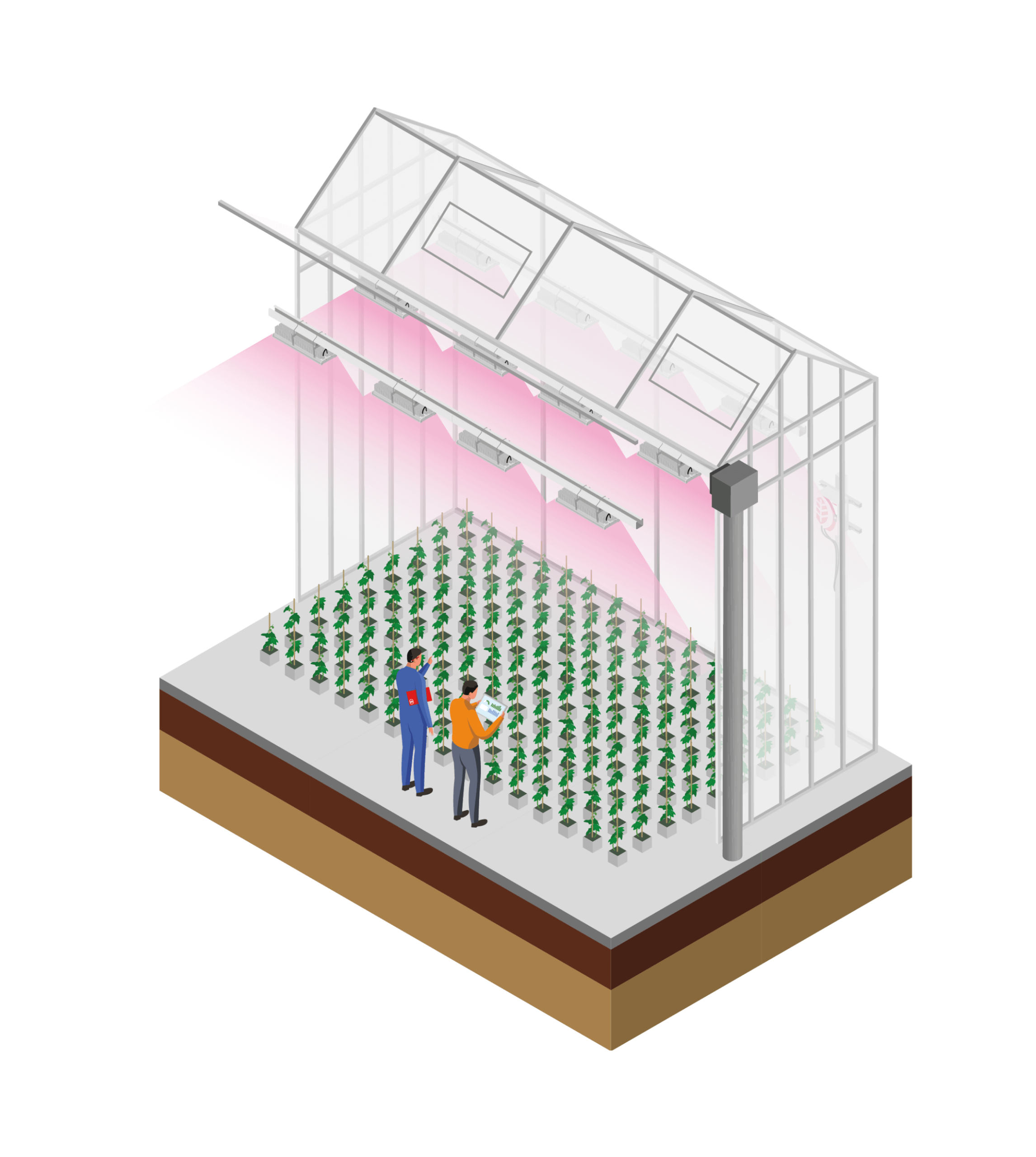
ECO&FLEX Solution
Automate with MyRED
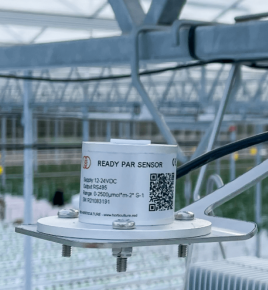
Capture with RED Sense
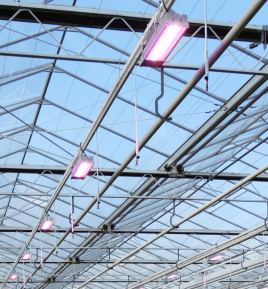
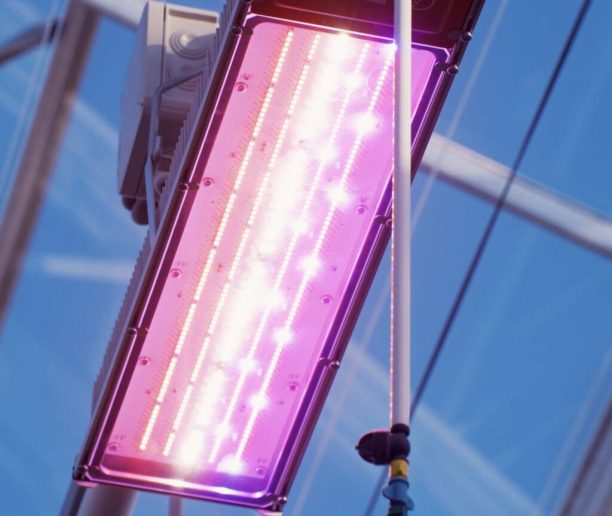
Illuminate with RED T320 – T680
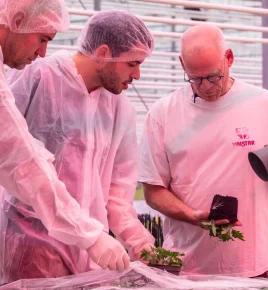
Technical support byRED
POST
What is light?
To know how to choose future lighting for your greenhouse, it’s important to know its characteristics. These will help you achieve your production and growth objectives. With so many different types of horticultural lighting on the market, you’re likely to find yourself drowning in information and acronyms. You’ll come across measurements such as Watt, Lumens, LUX, PAR, PPF and PPFD. It’s true that they’re all related to lighting in general, but not all of them are relevant to horticultural lighting. The most important thing is to understand which measurements to look at, depending on your requirements. That is why it is important to know how light works.
They go further thanks to photobiology.